Real-time strategy · The Great War · 1914

They said it would be over by Christmas. It was not.

Found a town with twelve workers. Dig the trenches. Raise armies of thousands, and break a front that will not move with artillery, gas, cavalry, tanks, aircraft and battleships.

In development · Windows and macOS

Advance
22:30 on the front, captured in the game
10,000+men in one battle, over 100 fps on a desktop PC
5nations with their own units, uniforms and towns
39units: 24 core types and 15 national ones
25buildings, from the City Center to the Port
94research items, building levels and fort upgrades
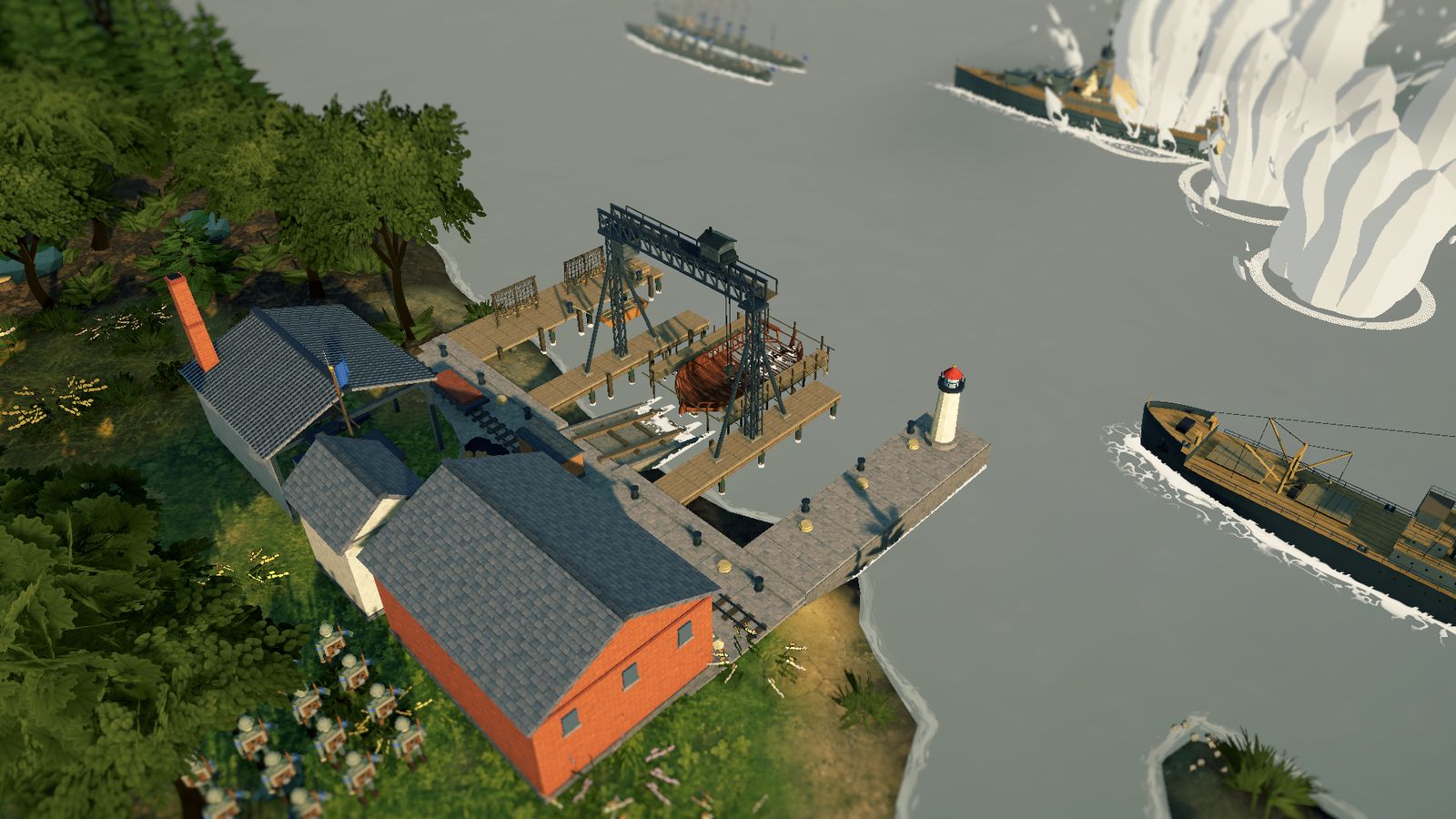
6battlefields, from Flanders to the open sea

The war as it was fought

Armies,
not squads

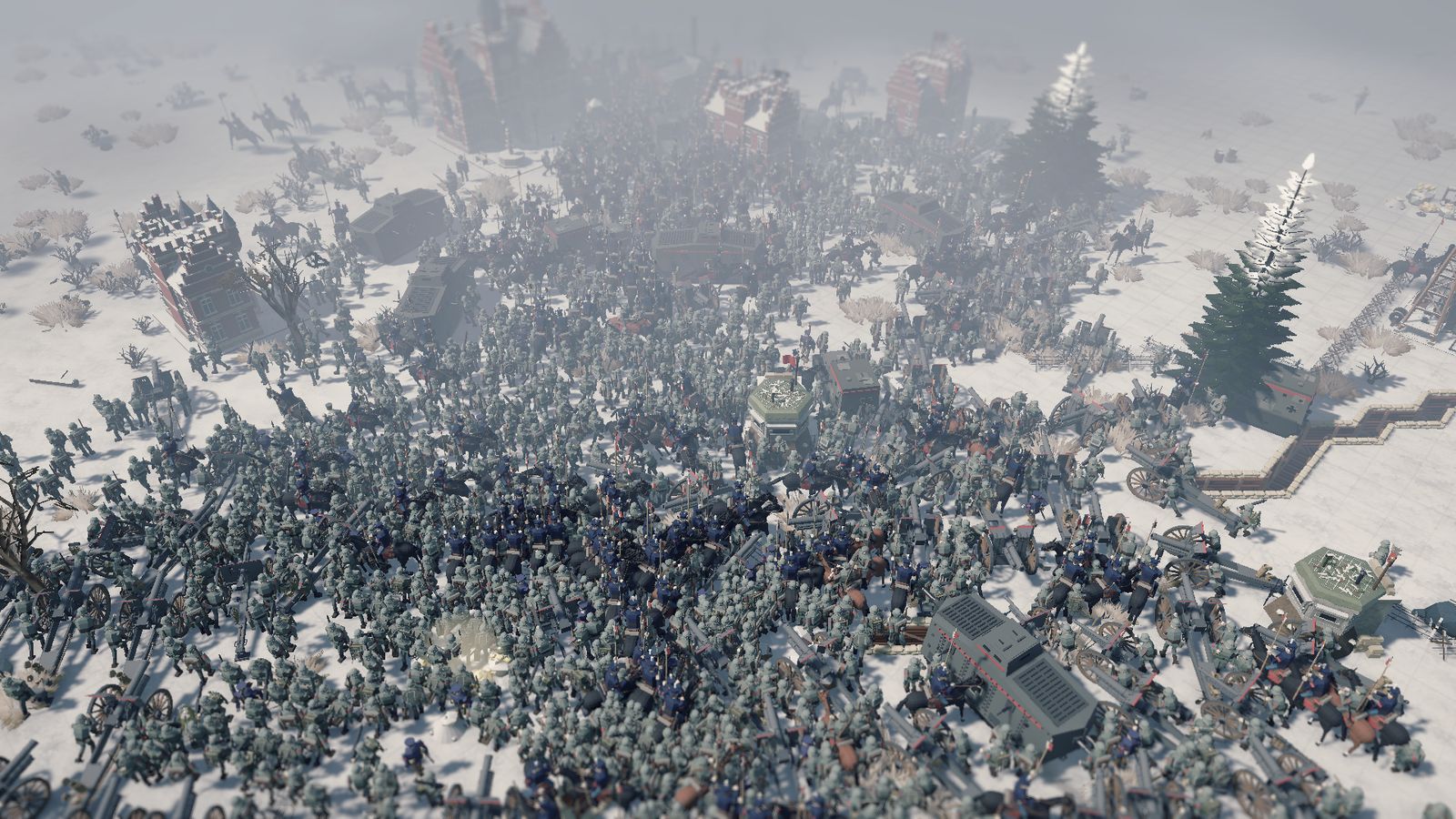
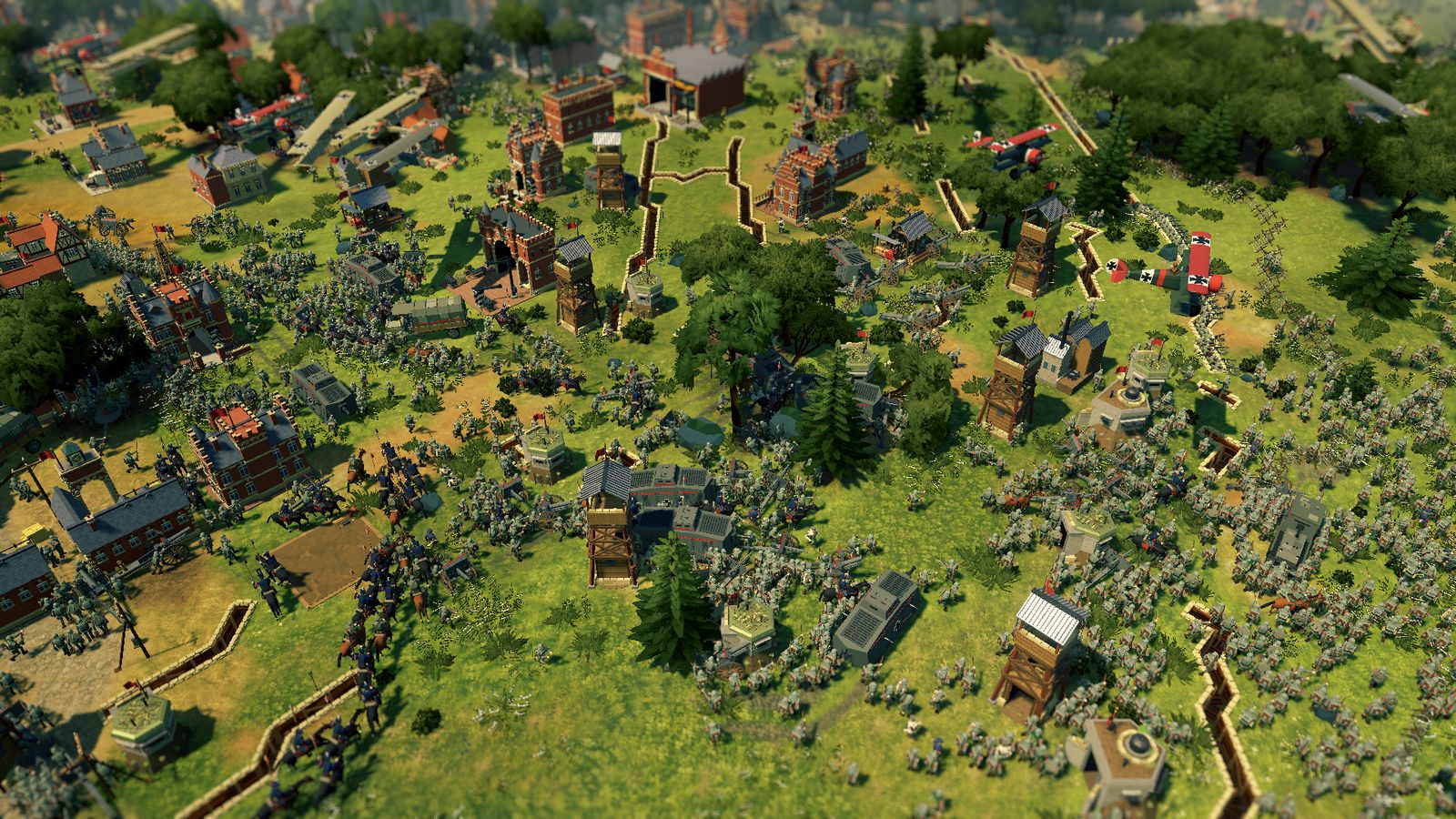
Built in the old school of mass strategy, Cossacks and The Entente: Battlefields WW1, and rebuilt for today. Every soldier is simulated, and a single front can hold thousands of them.

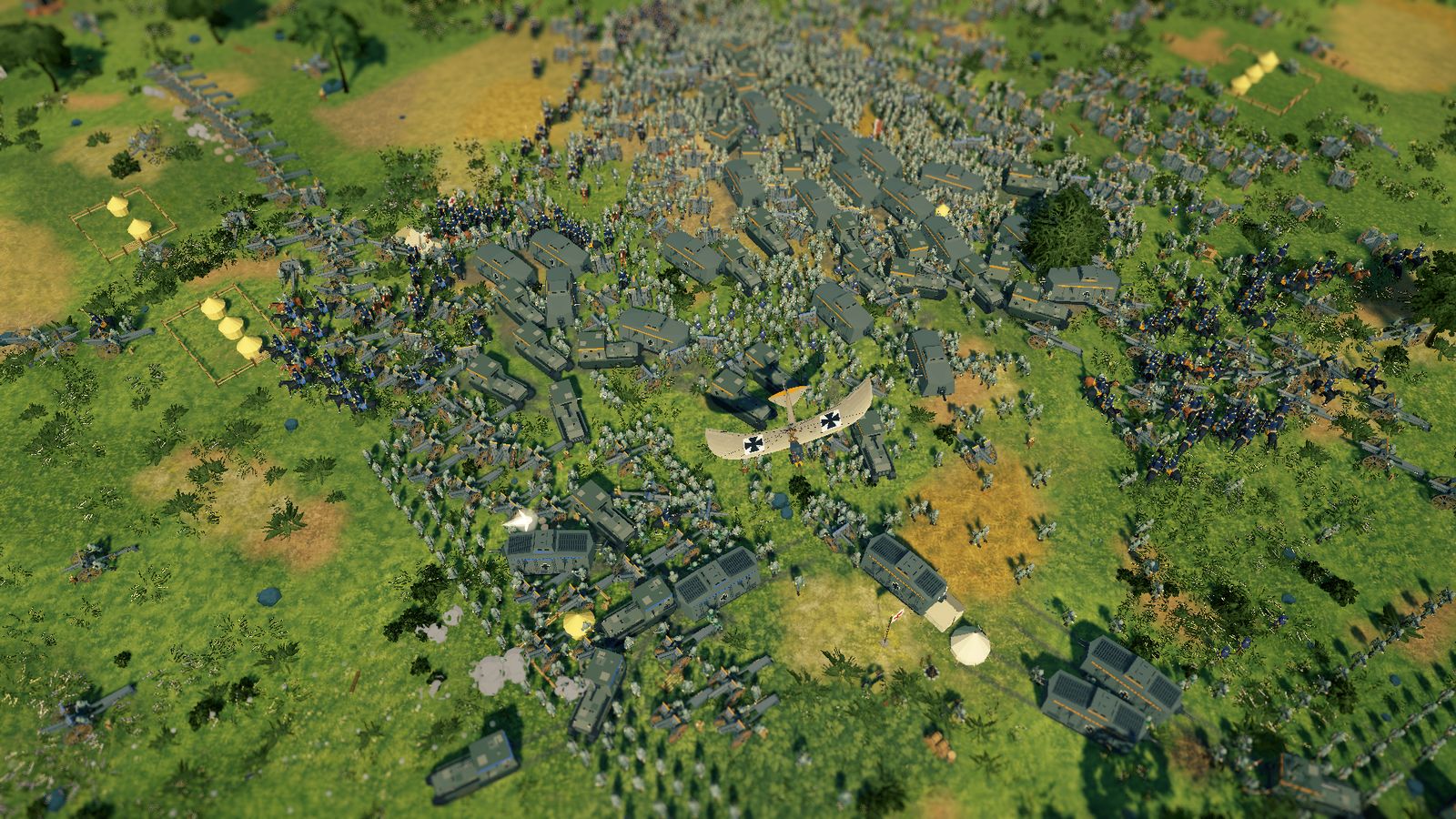
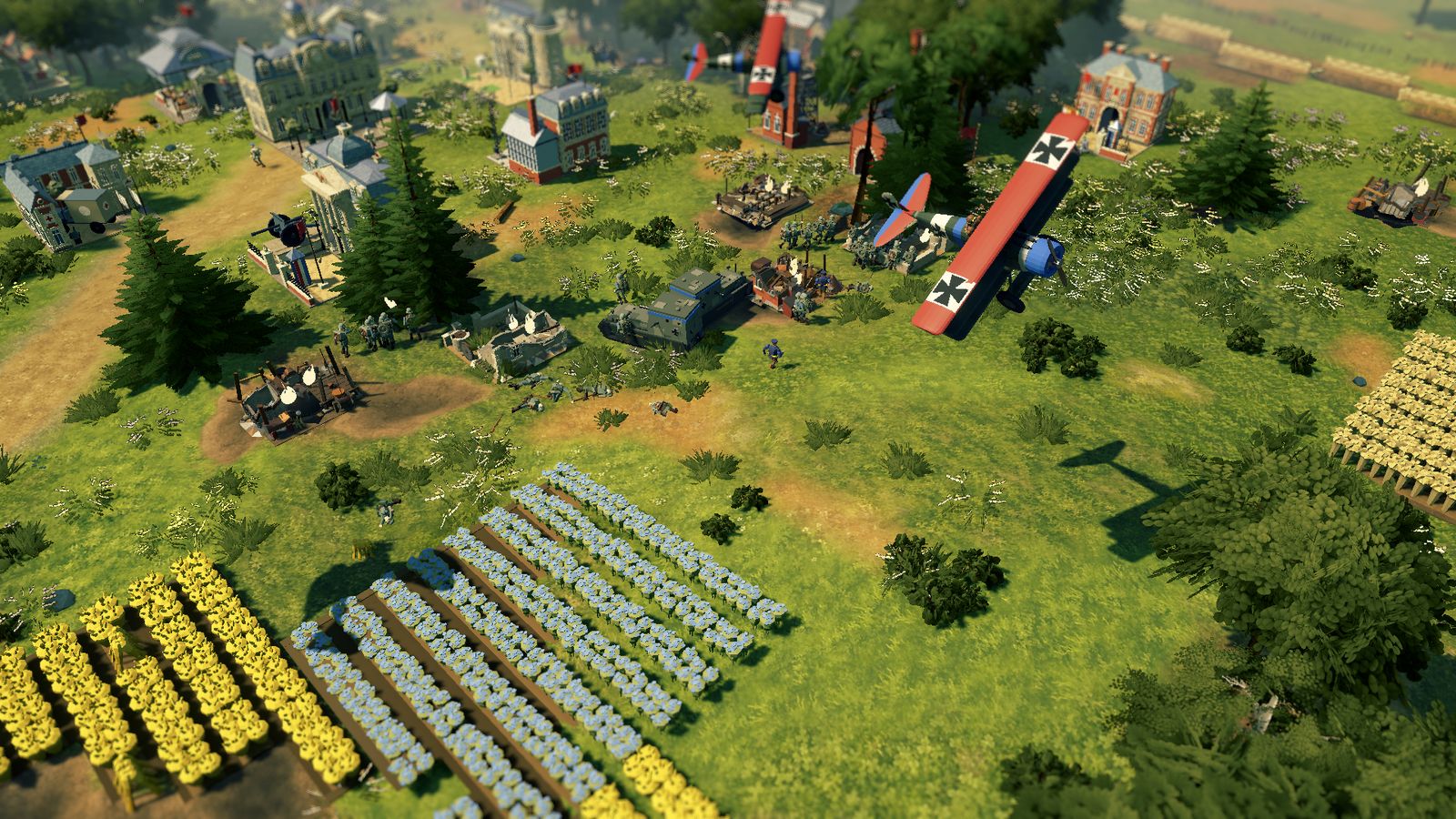
Tanks and thousands of infantry in a wide battle, a German biplane overhead

I · Mass warfare

Command a front, not a handful of men

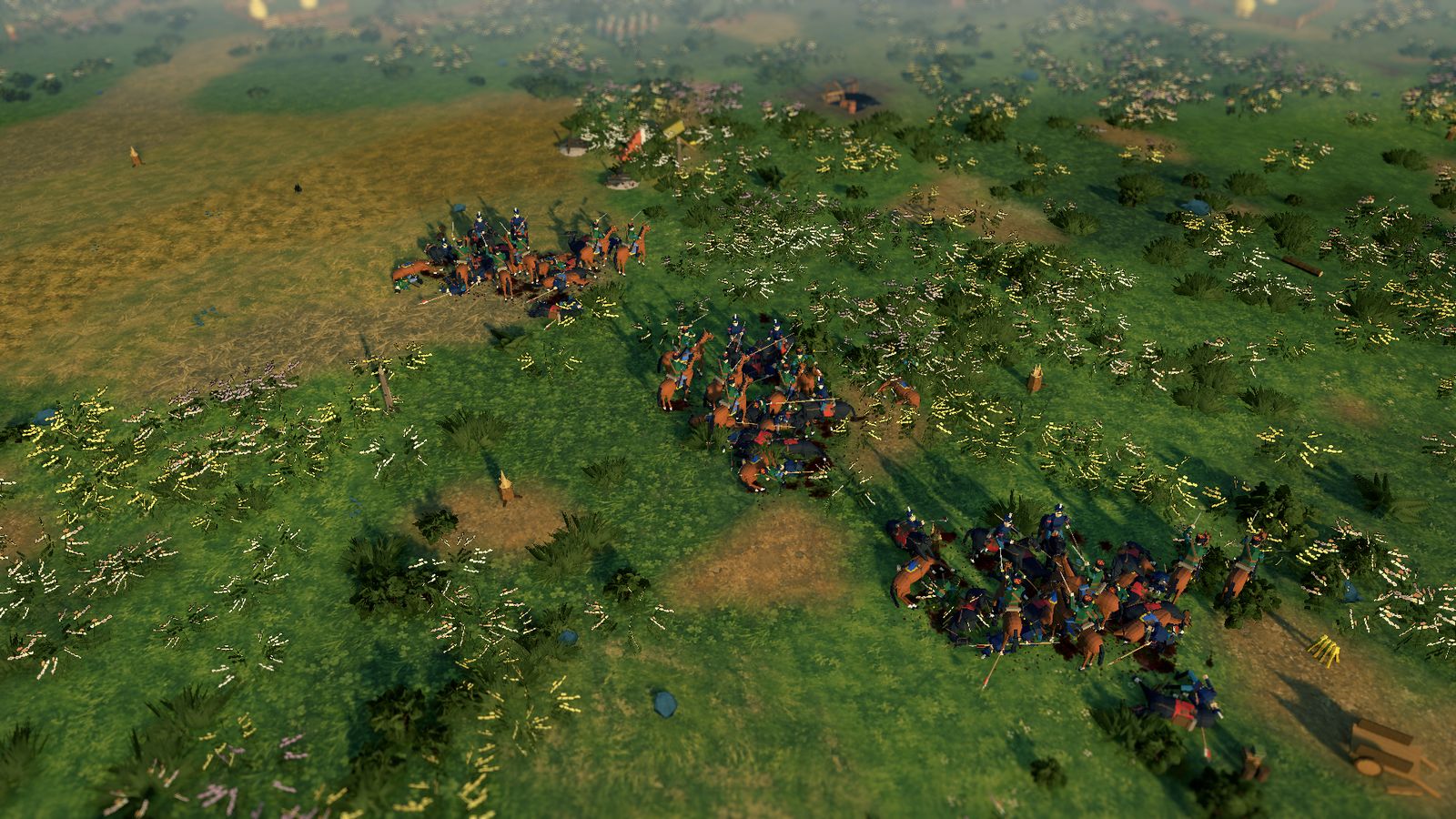
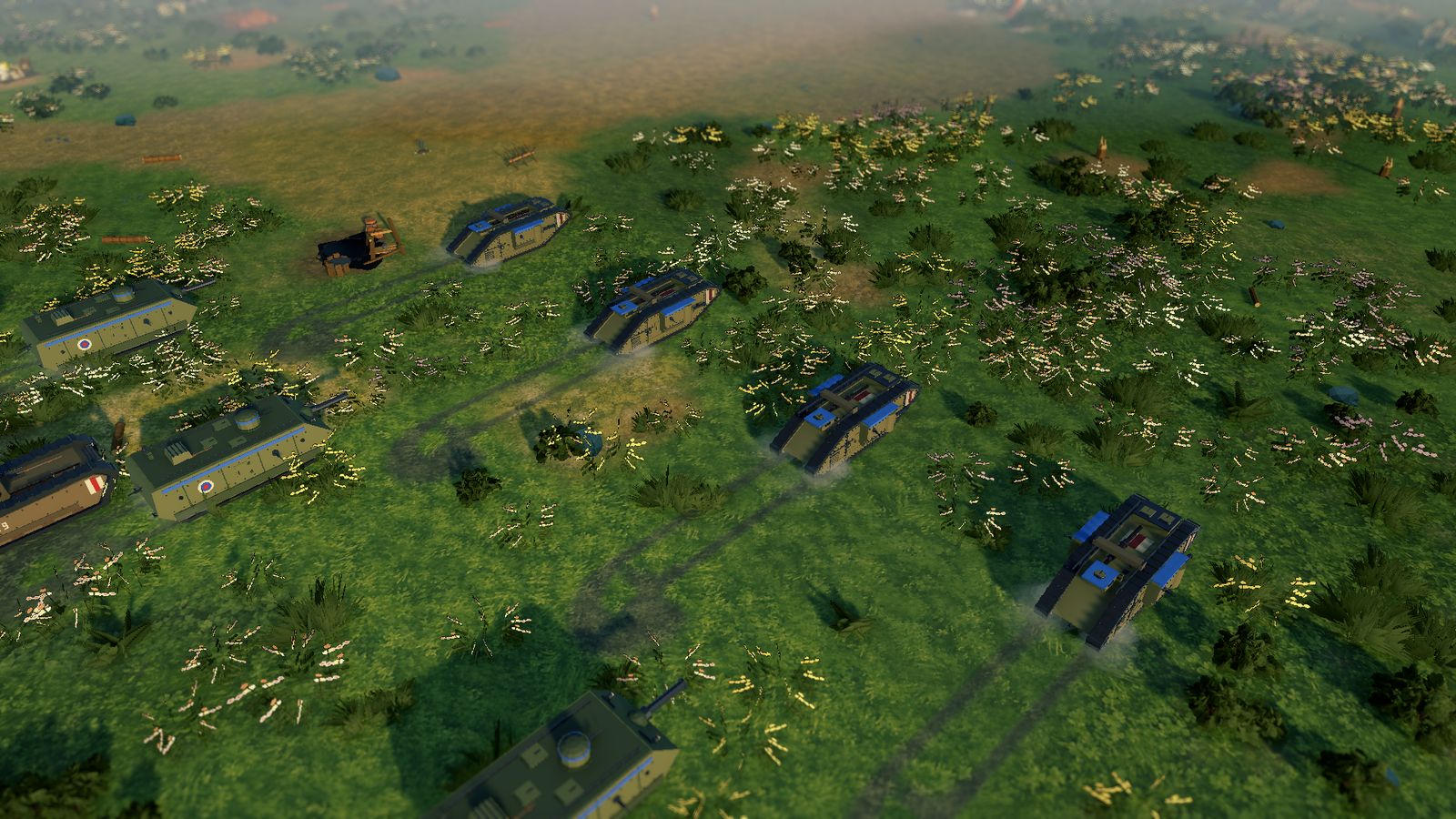
Squads of up to 126 men march under an officer, who makes them hit half again as hard and shrug off a third of every hit. Drag a line with the mouse and the army forms on it: tanks ahead, cavalry on the wings, foot behind, guns at the back.

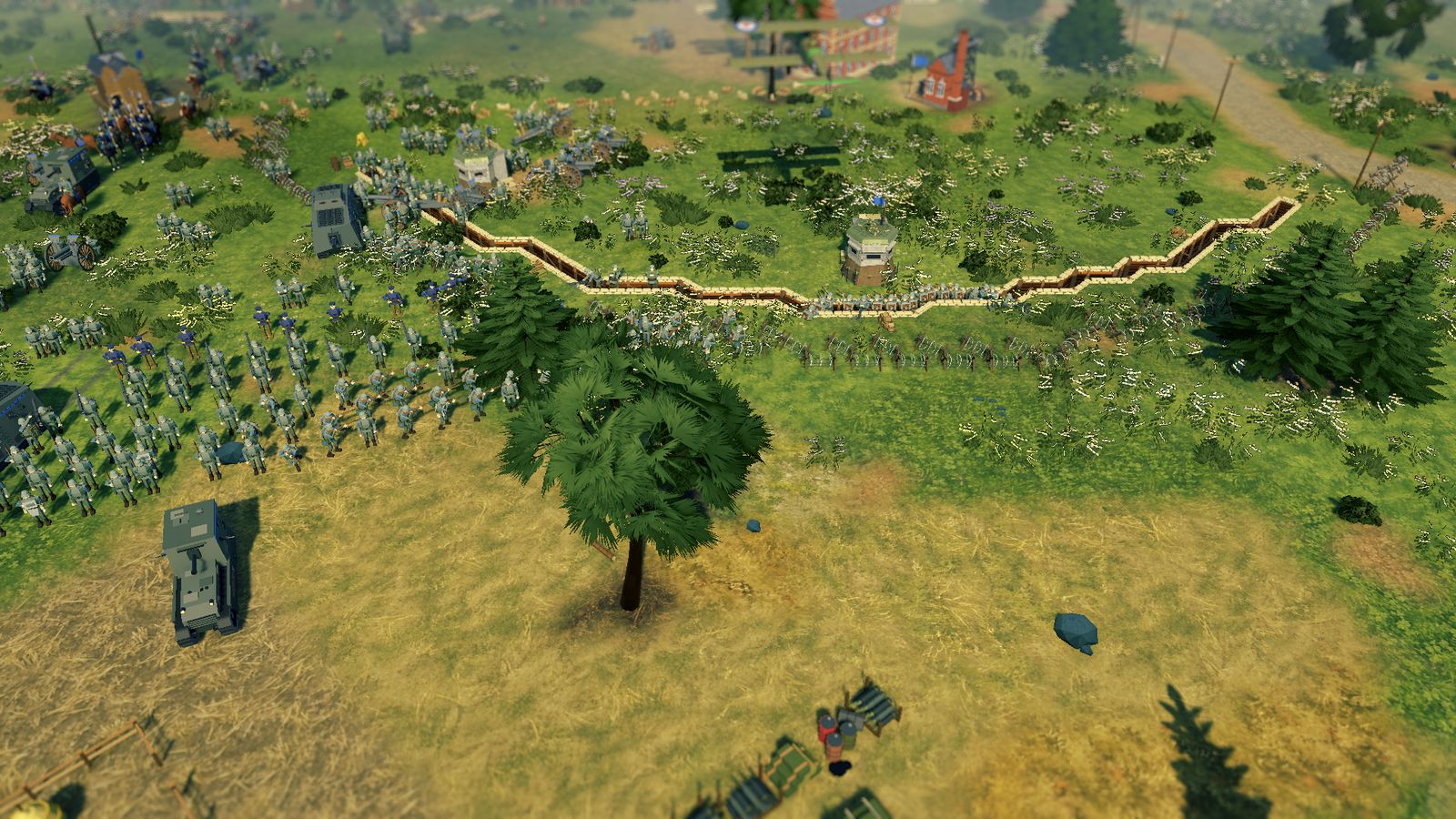
A zig-zag trench line across a grassy hill with tanks and infantry before it

II · Fortified fronts

Dig in, and watch them come

The original game never had trenches or wire. Here they are the heart of the war. Workers dig trenches, wide trenches and barbed wire cell by cell. Men in a trench duck under shellfire and stand to the parapet when the enemy comes close. More riflemen will not cross that ground. Grenades, gas, flame and tanks will.

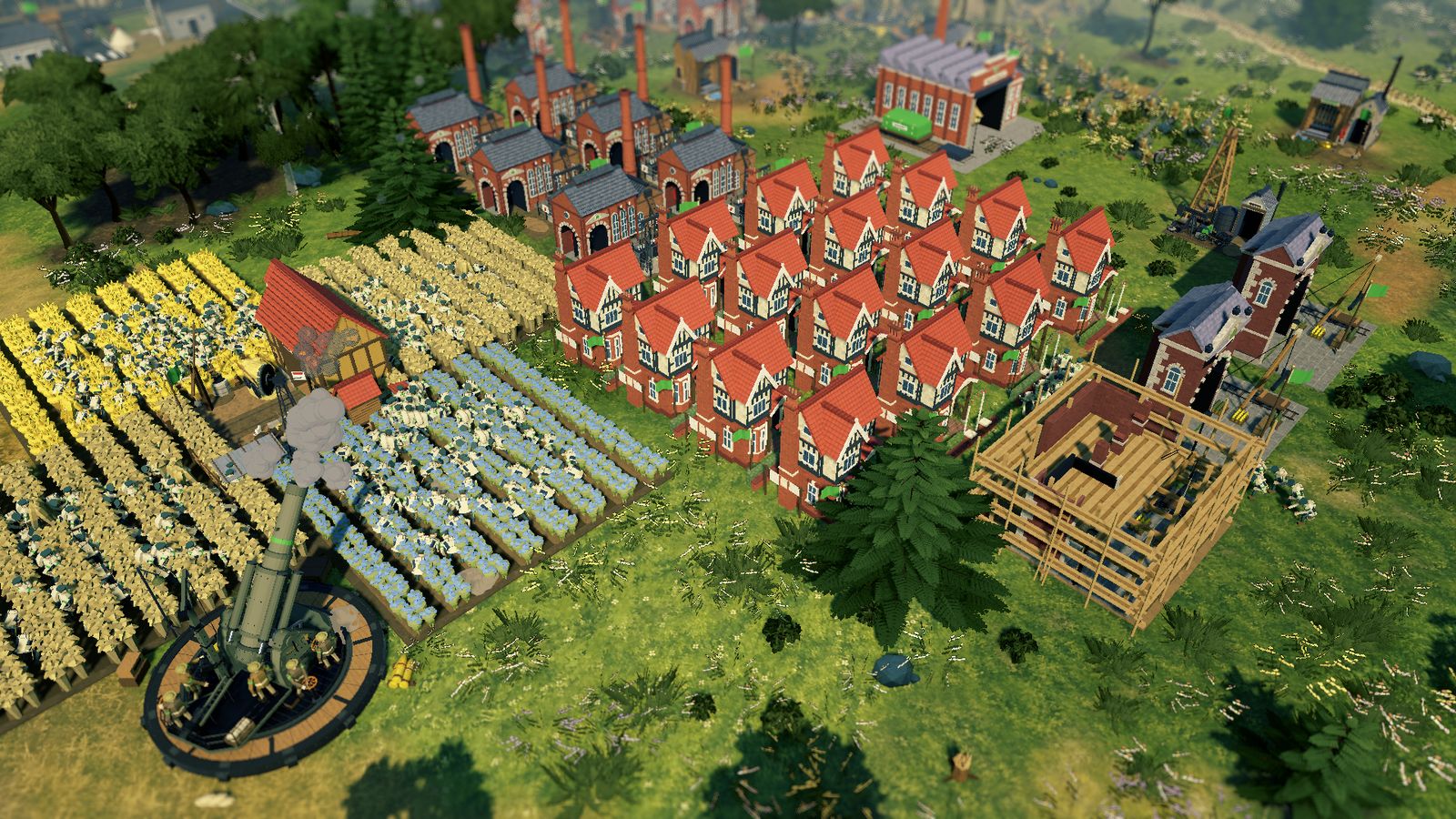
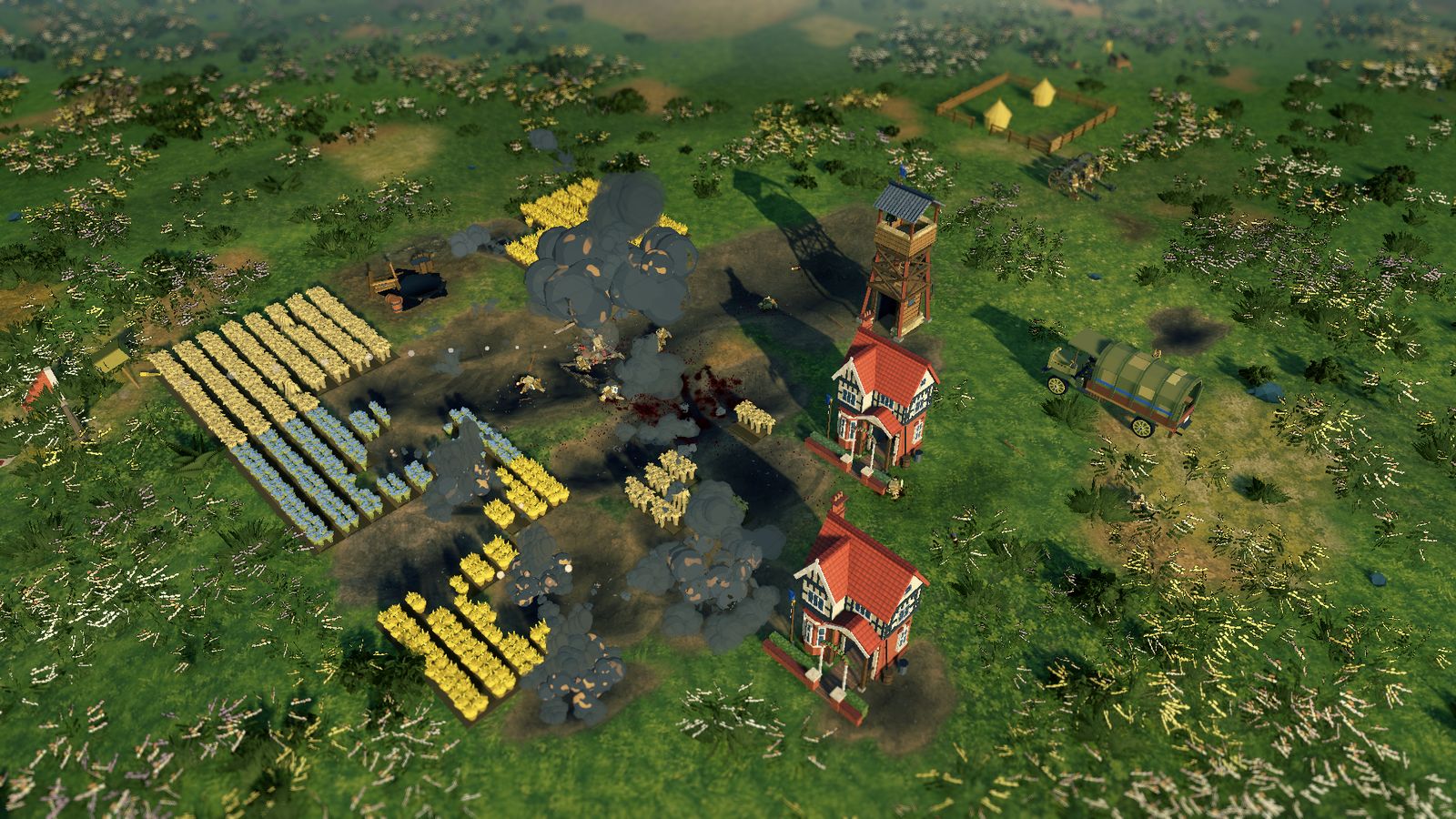
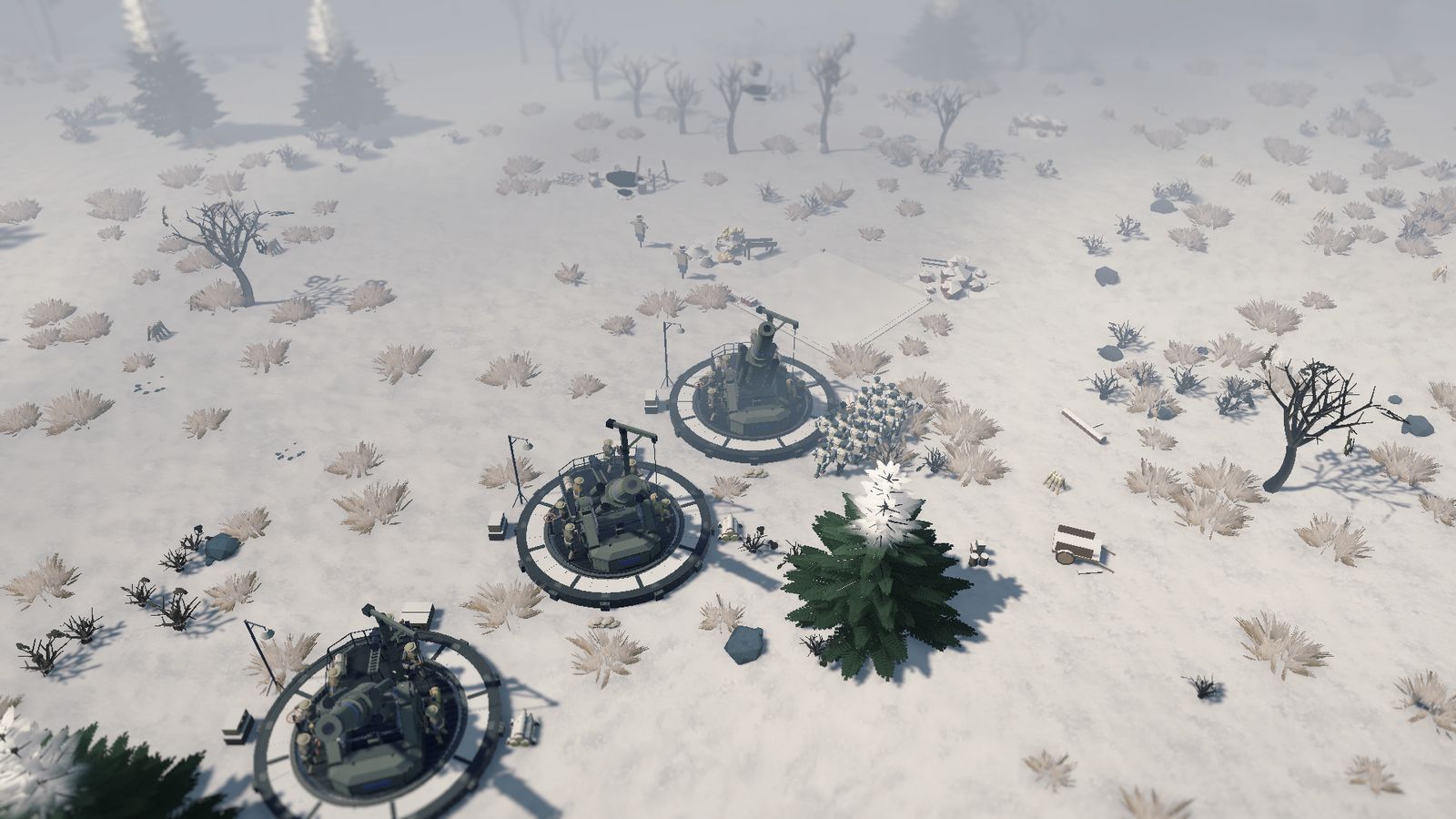
A town of red-roofed houses with barn fields and a siege howitzer in its pit

III · An economy you can see

Twelve workers, then a nation

Workers walk into the mines and sawmills, harvest fields that shells can tear up, and carry food home 80 at a time. Mines, sawmills, oil rigs, houses and power stations climb six levels. Every man eats. There is no population cap, only what your nation can feed.

“You will be home before the leaves have fallen from the trees.”
Attributed to Kaiser Wilhelm II, to his troops, August 1914

The wire at night, captured in the game

Order of battle

Every arm of
the Great War

Damage types meet armour classes: bullets never scratch a tank, shells hurt everything, flame empties a bunker and leaves its walls. Every shell flies a real ballistic arc, at 1.5 metres a cell.

A dense mass of infantry fighting in the snow among bare trees
Winter: a mass assault meets the line.

The queen of the battlefield

Riflemen carry four grenades and walk up to bunkers, tanks and trenches to throw them. Machine gunners set up in a second and sweep the ground in overlapping bursts that pin men down. Snipers vanish when they stand still. Medics find the worst-wounded man in sight.

WorkerRiflemanOfficerMachine GunnerMortar TeamFlamethrowerSniperMedic
  • Riflemanrange 16.7 · 4 grenades
  • Machine gunner, set uptakes 40% from bullets
  • Mortar team6–31 cells, indirect
  • Flamethrower60° cone · burns garrisons
  • Sniper, camouflagedseen within 4 cells

One battle, one frame

Four seasons,
every hour

The same battle, the same frame: four seasons, six hours of the day, 24 captures from the game. At dusk the windows light up and searchlights sweep the front. Season and hour change the look only, so no side gets an edge.

The battle in summer at midday

Summer · 13:00Midday

Season

Battlefields

Maps that grow
like land

Every map is generated in the order real land forms: relief, then the rain that drains it, the rivers it cuts, the villages by the water and the roads between them. Each stage reads only what came before it.

  1. 01PlanFronts and bases on a coarse grid
  2. 02ReliefHills, valleys and plateaus by battlefield
  3. 03DrainagePriority-Flood, D8 flow, erosion
  4. 04WaterRivers, bridges, fords, ponds
  5. 05SettlementBases, deposits, villages, roads
  6. 06Land useMarsh, woods, boulders
  7. 07ValidationEvery base reachable and fair
BattlefieldWoodsCharacter
Flanders9%Flat, wet lowland
Somme13%Chalk plateau and dry valleys
Verdun16%Deep ravines with rocky sides
Argonne28%Forest, the thickest woods
Champagne6%Open chalk downs
Sea832²Two coasts, cliffs, beaches, 3–5 islands

Maps 200, 280, 420 and 832 cells a side. Up to four sides, random or corner starts.

High ground mattersEach cell a unit stands above the low ground round it adds 8% to its sight and reach, up to 20%. Hills block direct fire; howitzers fire over them.
Rivers have crossingsTwo or three bridges of timber, stone or steel on straight, narrow reaches, and one or two fords. Bridges carry two lanes of traffic and stay a bottleneck.
Woods slow, never blockMen keep 75% of their speed in woods, guns and vehicles 50%. Tanks in marsh can bog down. Trees felled by tanks and shells grow back in 5 to 10 minutes.
Villages spaced like real onesScaled down from the Somme département, where 771 communes share 6,170 km², about 3 km apart.
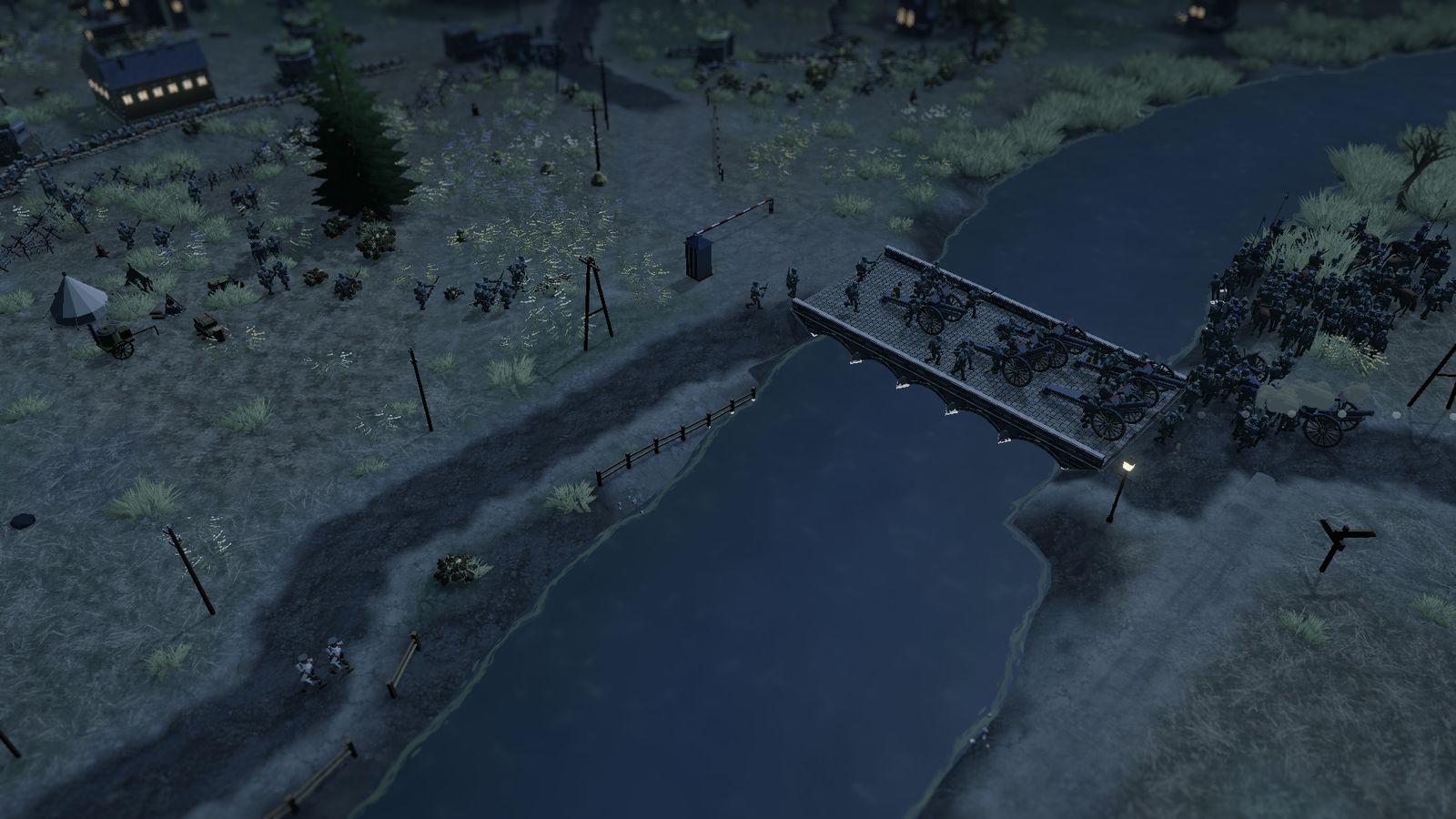
A night battle on a bridge over a river, lamps lit along its deck
Night on the river: a column fights its way across a bridge.

The opponent

A General Staff,
not a script

The computer opponent is built like an army headquarters. It plays a whole side, from the first worker to battleships, through the same orders a player gives, and it knows only what its own men have seen.

01

Sense

  • AIView
  • ShellObserver

One pass over what its side can see.

02

Know

  • WorldModel
  • Intel

A memory of the enemy that fades with time.

03

Weigh

  • UnitProfiles
  • ForceModel

Predicts a fight before it starts one.

04

Decide

  • Commander
  • Doctrines

Posture, main effort, the home guard.

05

Plan

  • Operations
  • FireDirection
  • Air · Naval staff
  • Quartermaster

Task forces, routes, fire plans, the town.

06

Act

  • Ledger
  • CommandSink

Every order priced, then issued as a player's.

Fair play

It sees what you see

Enemy units count only while seen, buildings once seen. A building you destroy out of its sight is still believed to be standing.

Counter-battery

It hears your guns

Every enemy shell that lands in sight is traced back along its flight to where the battery may stand, within ±8° on Veteran. Several reports make a target.

Routes

It reads the map

Routes cost more the more fire covers them, and after being thrown back it comes again from a new bearing.

Fire plans

It prepares an attack

It ranges its guns, cuts the wire, halves the forts on the breach and shells the trench before the break-in: armour first, riflemen in narrow blocks, a bite seven cells deep.

Drill

It marches in blocks

Companies form up under their officers, rifle line in front and guns at the back, and march in legs, waiting for the slowest.

Measured

Trained in an arena

Every change is judged in headless AI-against-AI leagues of 40 and 60-minute matches. Every number it uses lives in one data file.

AdaptiveGeneraloberst

Answers what it sees: guns against armour, machine guns against massed infantry.

AggressiveStosstrupp

Attacks early and often and keeps few men at home.

DefensiveHindenburg

Fortifies, then shells you from behind its lines.

EconomicMaterialschlacht

Builds the biggest economy, then comes with guns and tanks.

The Arena Lab

Where the AI is measured

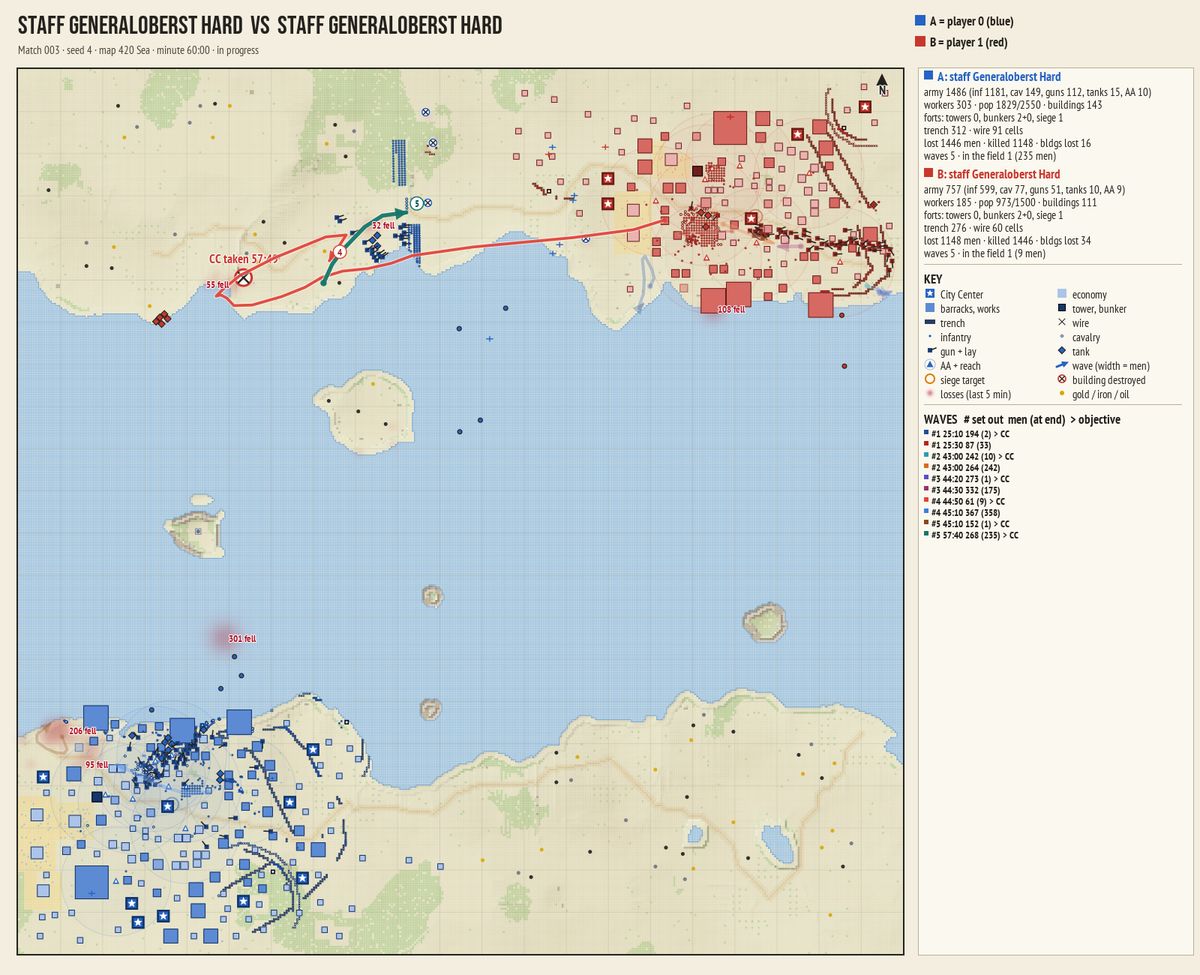
Two Hard generals on the Sea map. The red one has landed on the blue coast and holds a bridgehead; squares are buildings, lines the routes of its task forces.

Four difficulties. Easy thinks every 3 s and telegraphs its attacks. Veteran thinks every second, sends scouts ahead of each task force and gets the only economy bonus, +25%.

A map from the Arena Lab: two AI sides on opposite coasts, the red side's landing fighting on the blue side's shore

Two blocs, five nations

Choose your flag

The bloc is flavour: any nation can fight any other. Each brings a bonus, one extra infantry unit and two units of its own in place of the common ones.

Entente

Britain

Vehicles +10% HP; the Tank Plant trains 15% faster.

Extra infantry
Ranger
Own units
Lewis Gunner, Mark V

Entente

France

Artillery fires 10% faster.

Extra infantry
Tirailleur
Own units
Canon de 75, Renault FT

Entente

Russia

Infantry costs 15% less food; houses hold 10% more.

Extra infantry
Women's Battalion
Own units
Cossack, Russo-Balt lorry

Central Powers

Germany

Infantry +10% accuracy.

Extra infantry
Stormtrooper
Own units
Uhlan, A7V

Central Powers

Austria-Hungary

Forts, trenches and wire +20% HP, built 20% faster.

Extra infantry
Kaiserjäger
Own units
Hussar, Škoda M.15

Under the hood

Built for ten
thousand men

Big battles usually cost a game its multiplayer, its economy or its AI. This one keeps all three, because the whole war runs in one deterministic simulation.

Q48.16

Fixed-point maths

No floats in the rules. Every machine computes the same battle to the last bit, on any number of cores, so players exchange only their orders: deterministic lockstep.

20/s

Simulation ticks

Parallel phases give the same result on one thread or eight. The view draws in between.

50,000

Units in the stress test

On the Huge 832 map. Shared flow fields steer whole armies instead of a path per man.

GPU

Instanced men

Animated in the shader from baked clips, with far detail levels built at run time. Every soldier keeps his shadow and animation at every zoom.

1 file

Every number

All of the game's numbers live in one data file, hashed in the multiplayer handshake, so every machine plays by exactly the same rules.

LAN

Up to four sides

People and AI together, with version and data checks and desync detection. Saves keep the whole state, and old saves keep loading.

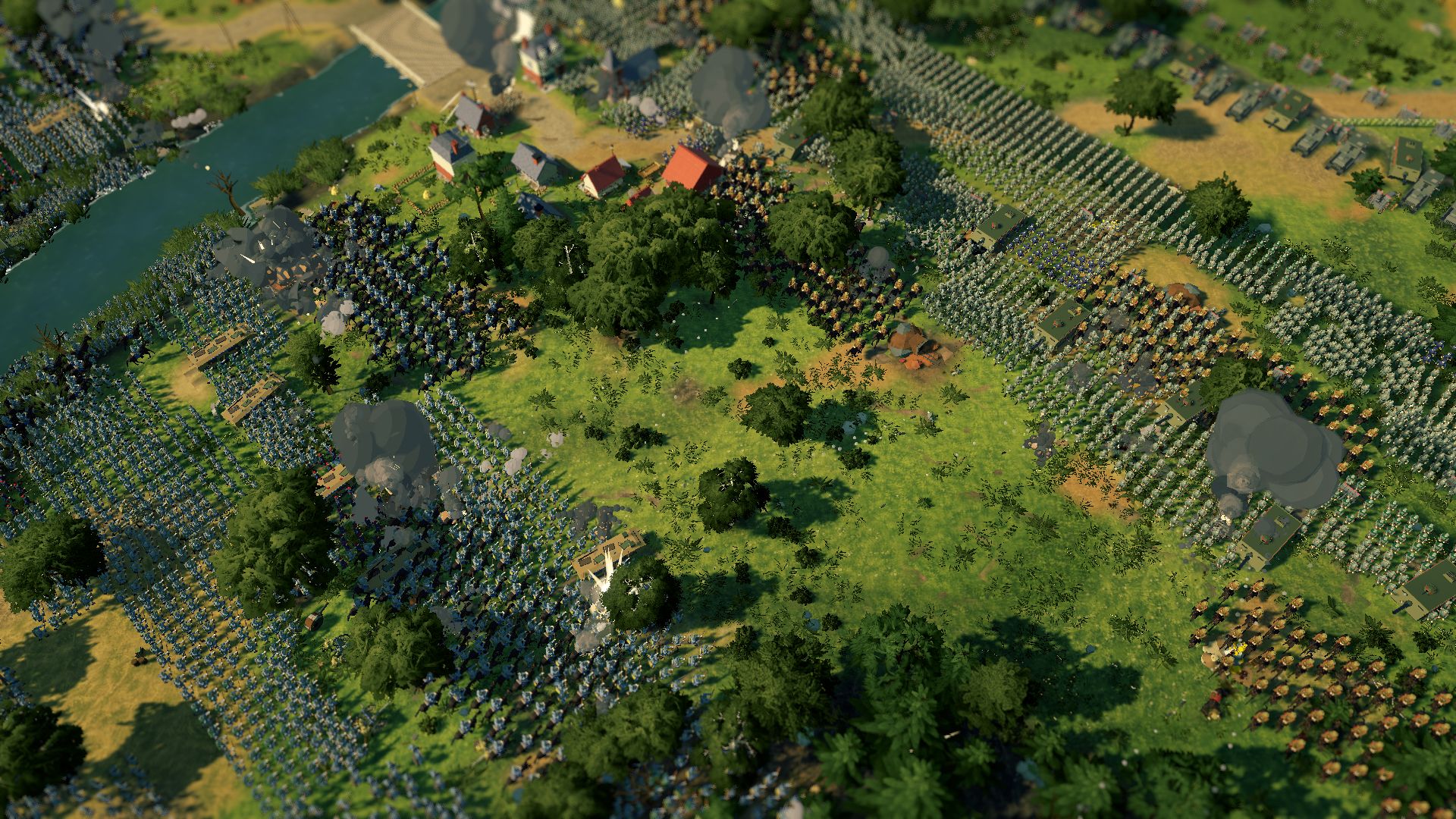
Blocks of thousands of soldiers close on each other across fields and woods by a river, shells bursting between them
The stress test: 50,000 men, two armies of 25,000, a few seconds into the battle. Captured in the Unity editor on a Mac.

Ways to play

Take the field

Up to 4 sides

Skirmish

You and up to three AI generals on a generated map, free-for-all or in teams. Switch off tanks, aircraft, artillery or gas for a different war, or let an AI play your side and watch.

10 · 20 · 30 · endless

Wave defence

Hold out with allies against ever larger waves. Every fifth wave is heavy, and tanks arrive from wave 13.

Local network

LAN battle

Up to four sides, people and AI together, under skirmish rules.

11 steps

Tutorial

A guided start on a small map: build a base, train an army, take an enemy outpost.

Field notes

It started on
a demo disc

Somewhere in a pile of cheap CDs was a disc of random demos, and one of them was The Entente: a few minutes of a war in miniature. That was enough. The day the full game came home in its own box is still one of the happiest days of a childhood. Then came Cossacks, and long afternoons of strategy side by side with a cousin at one computer.

Every match ended with the same wish. More men. A smoother battle. A front that feels alive.

The kid grew up and became a programmer. Years later the skills, the tools and the timing finally lined up, and there was no reason left not to build the game that was always missing, starting with what the original never had: trenches and barbed wire.

Over by Christmas is made by one developer, working alongside today's AI tools as modellers, programmers, testers and a sound department that never sleeps. Most of it is built in the quiet hours, after the house has gone to sleep and before it wakes up again.

Every number in this game lives in one data file. All but one: the love that went into it.